Julie, it’s so interesting that you brought this up. I was looking at ingot molds on Rio Grande yesterday and saw a mold release spray on their site. I’ve experimented with a light coating of oil as a release on ingot molds, but I’ve always preferred soot as a release. I saw this ingot mold release spray on Rio Grande and was wondering if it was worth trying out.
Rio Grande - Metallon Ingot Mold Lubricant Spray, Item No. 701095
Has anyone tried either of these ingot mold release sprays? Are they better or do you prefer the old school mold release paths?
i was initially unfamiliar with his recommendation of “petroleum soot”…so i asked him if the commonly used technique for cast iron molds, of using a neutral oil and heating the ingot to 500 degrees F (or the oil’s smoke point) would also work.
(like when seasoning a cast iron pan, after the oil’s smoke point is reached, the oil residue becomes polymerized and creates a non-stick surface)
this is where he mentioned that this high heat on milled stainless steel might cause the metal to release tension and maybe warp, so he did not recommend.
so…i am thinking that the sooting (using kerosene or paraffin in an oil lamp) and sprays allow for application of a non-stick coating, without the need for high heat…?
Keeping the temperature down with a spray vs heating the oil to a smoke point of less than 500F doesn’t make sense to me when you’re about to pour molten metal at over 1000F into the mold. Yes, I would keep my 2500F propane/oxy flame moving to keep the mold temp just above the oil smoke point, but I wouldn’t worry about a temp uner 1000F. Is there something I am missing? Does the spray actually work appreciably better than the soot? I haven’t heard a lot about people being unable to get their ingots out. Does the spray leave a better ingot surface? -royjohn
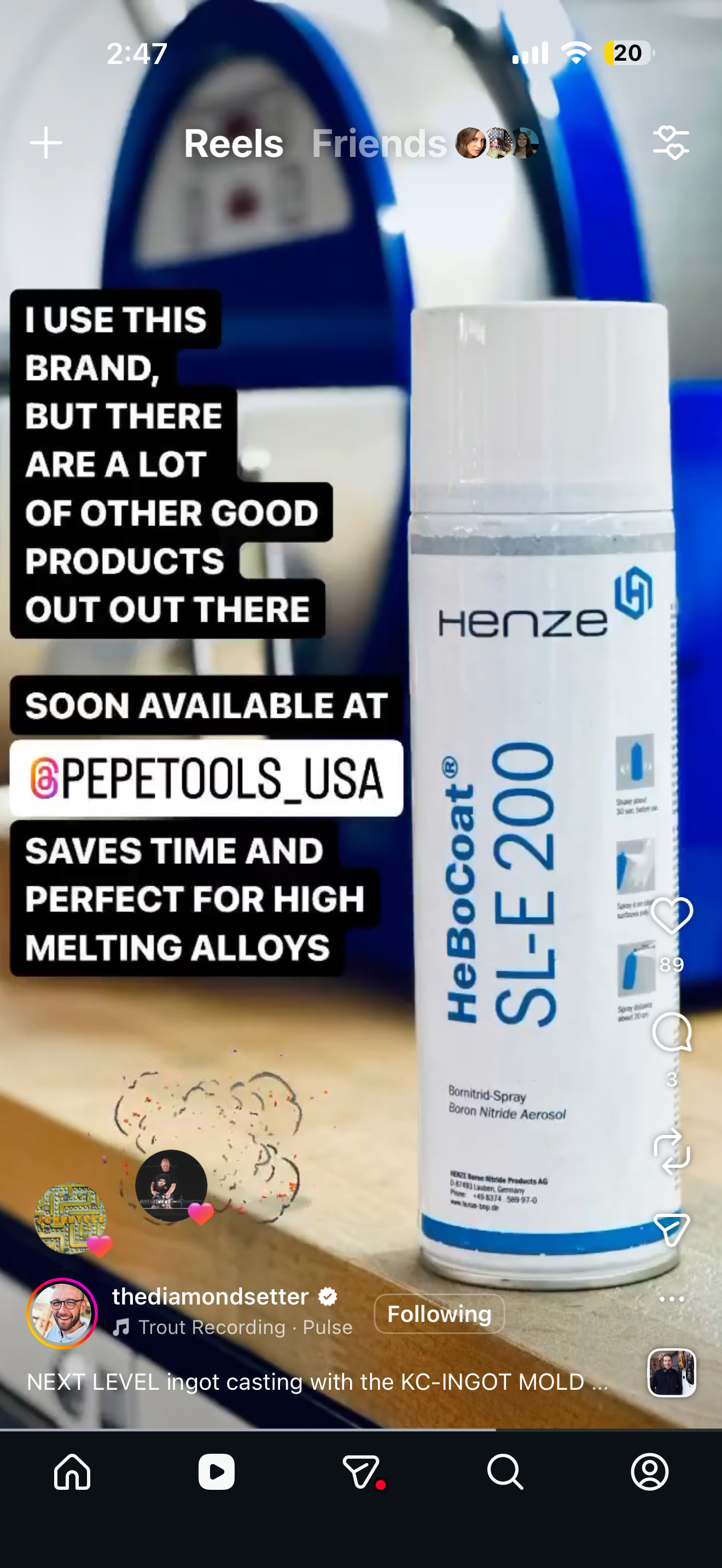
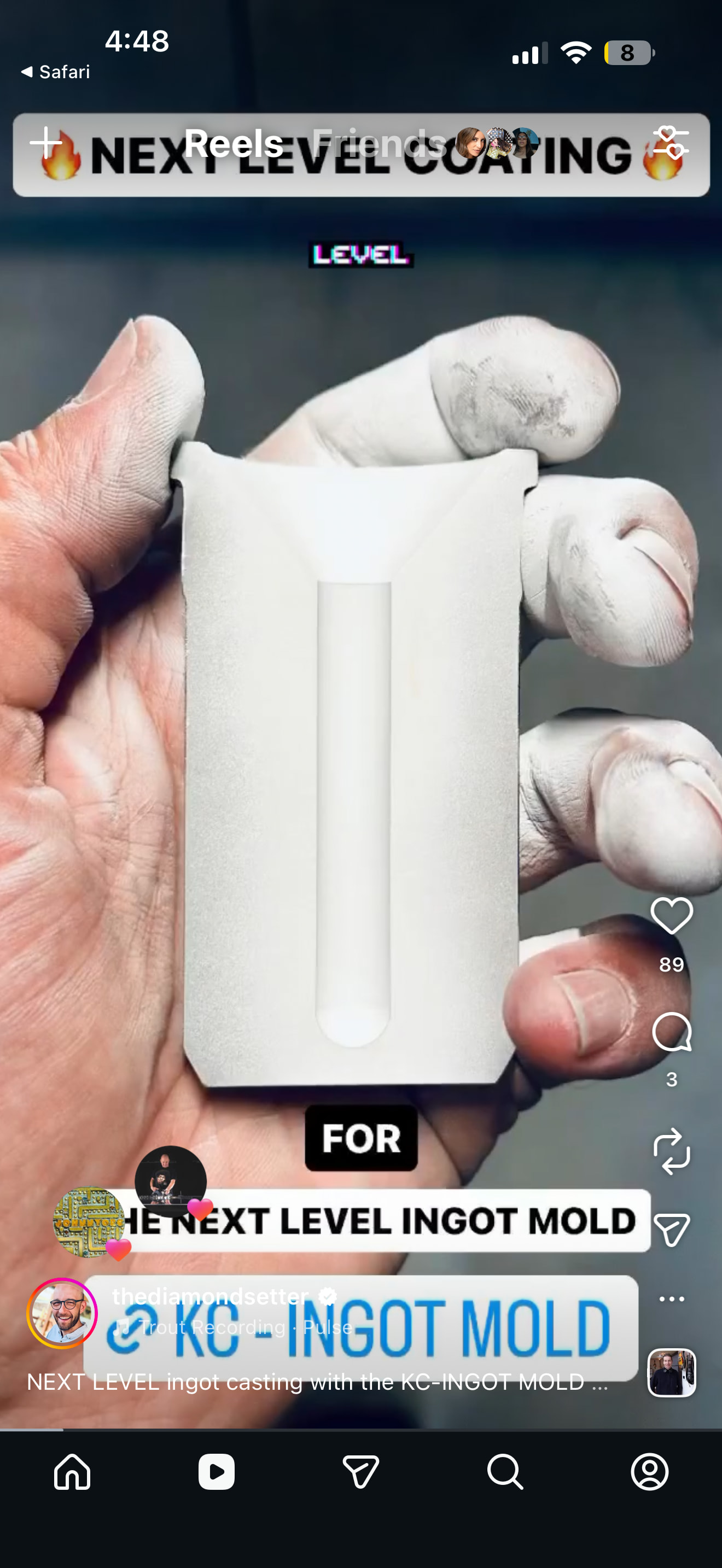
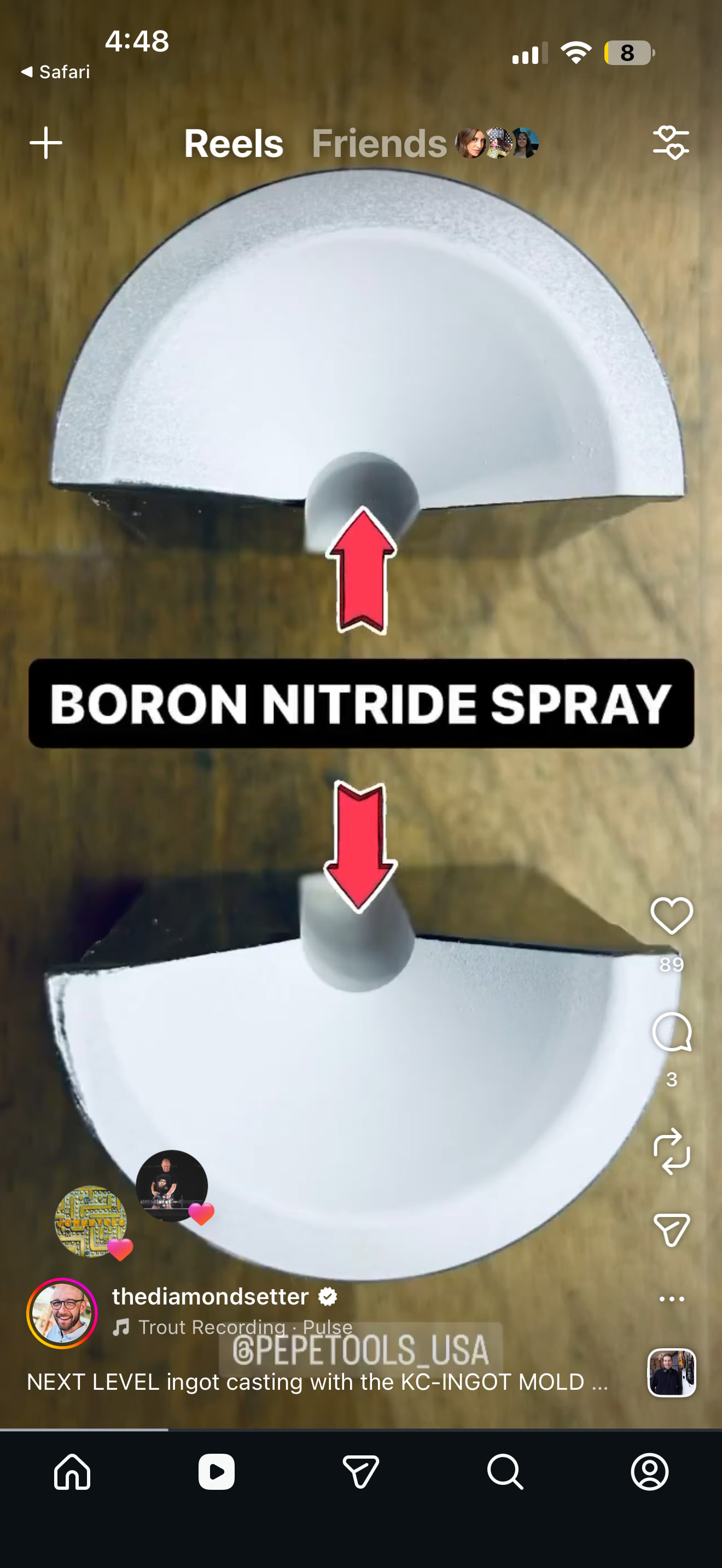
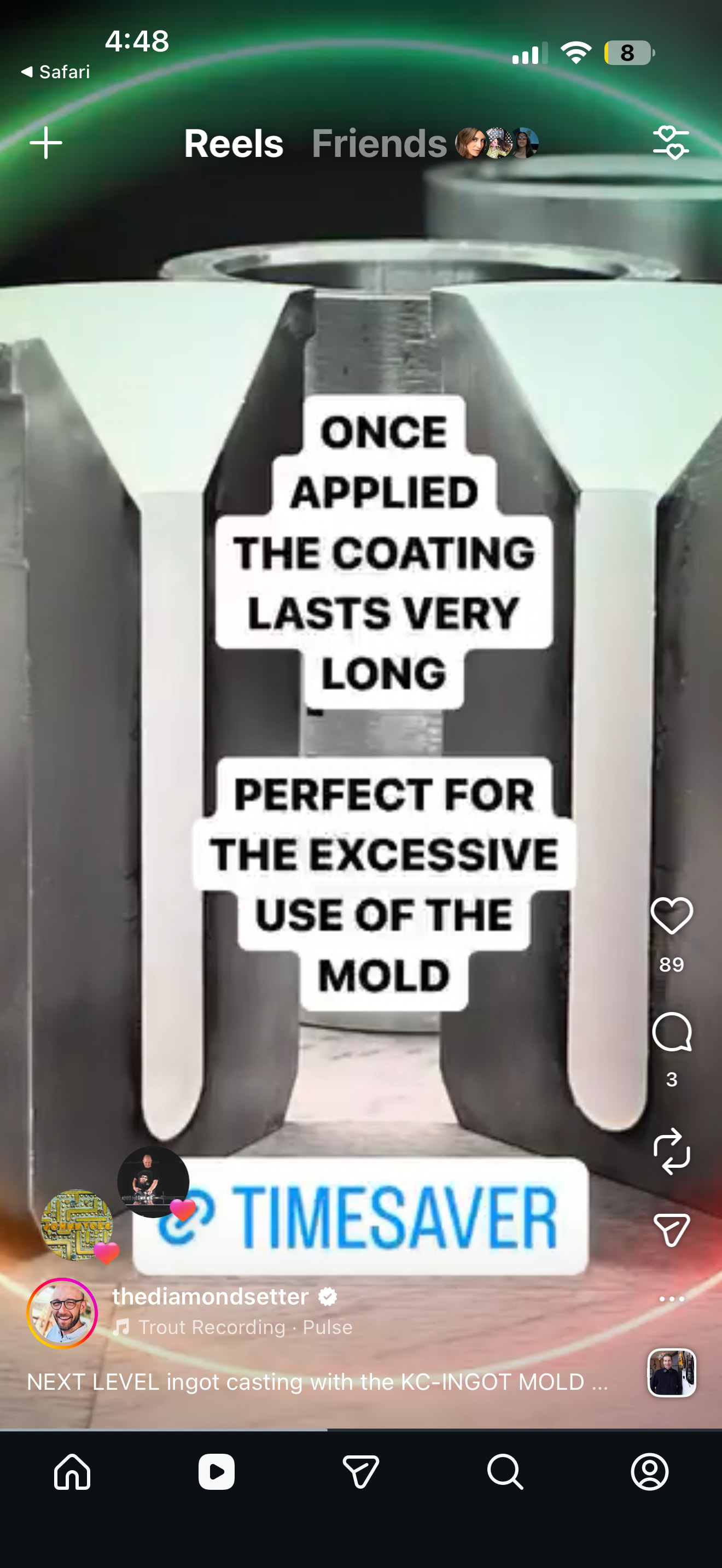
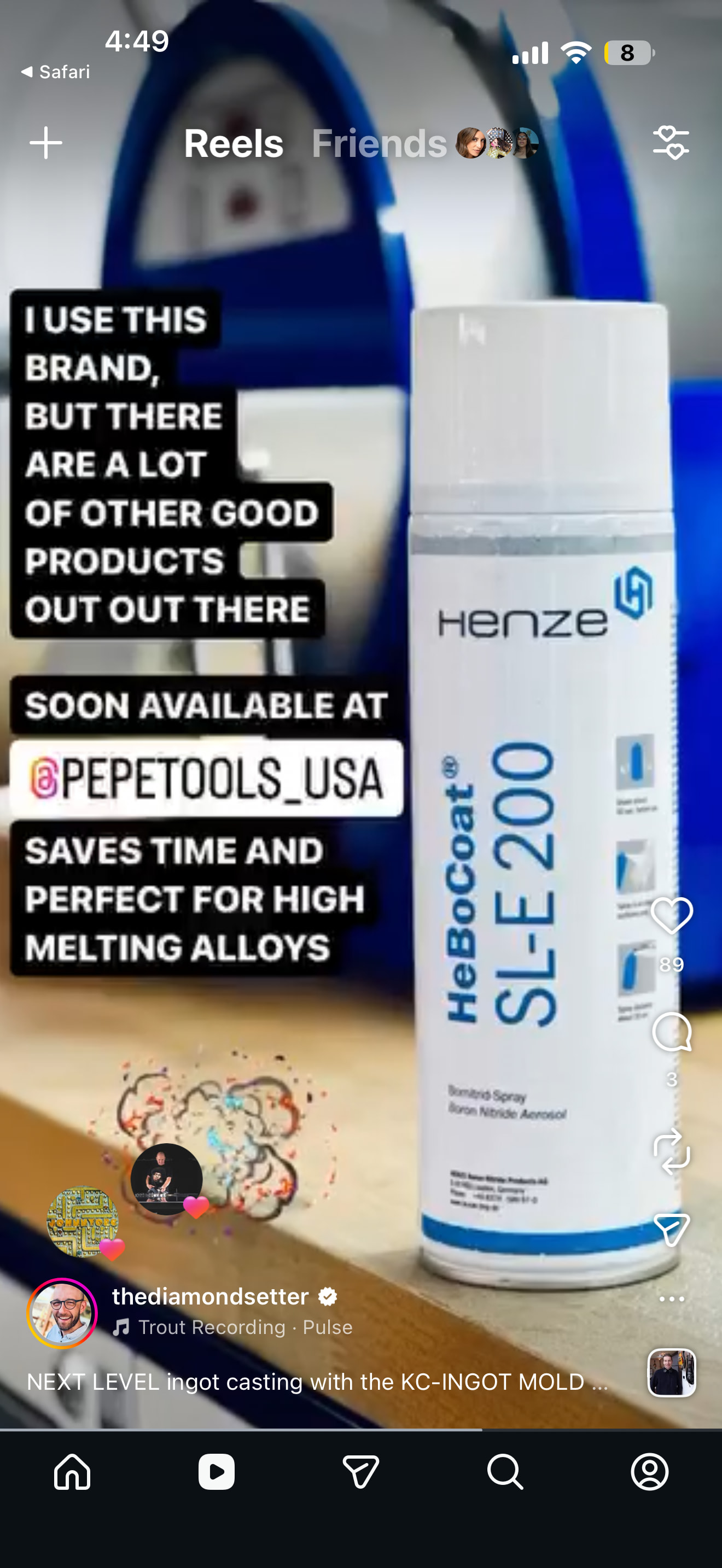
So a couple of thoughts, Stainless steel is not a great material to make an ingot mold from. It is a poor thermal conductor for a metal and has a high thermal expansion rate. This means it is easy for it to warp if it is not slowly heated to allow for a uniform heating of the metal. I think this is what he is referring to when he talks about “high heat on milled stainless steel might cause the metal to release tension and maybe warp” I looks like he designed these molds for use with the Indultherm MC-16 casting machine which is shown in his website. This is why they are round cylinders as it is being placed in the casting machine in the spot where normally one would place the investment flask. His recommendation for using Boron Nitride spray as a mold release is a good one, first off it is a dandy coating for any ingot mold or frankly anything where you don’t want molten metal to stick to a surface. I use it in my shop. And in the particular case of these stainless steel ingot molds if you don’t have a good mold release you could easily adhere the metal you cast into the ingot mold to the side of the mold just like solder. That said I have got to admit the large sprue cone like pouring area is awfully nice but the price is awfully high for such a simple item.
Jeff, I just went and looked at the Metalion spray on the Rio Site. I pulled up the SDS and it doesn’t list the active ingredient in the spray but lists it as “Patent Pending”. This raises my BS detector as it is showing that they are trying to pull a fast one with what that ingredient is. One of the things about getting a Patent is you have to publish your application on the PTO website where your claims such as what chemicals are in the formula you want to patent are there for anyone to see. This is the deal you make with the government when you apply for a patent. You publish your invention and the government provides legal protection that prohibits anyone from copying your invention for 19 years. So the company who filled out that SDS for the Metalion spray is trying to hide what the main ingredient is and violating the disclosure laws for the SDS. What their reasoning is is not clear because if they have actually filed a patent application it is published on the USPTO website.
Thanks Jim! That’s very interesting about the Metalion spray. For me personally, I think I’m going stick with soot on my ingot molds. It’s worked for me for decades and while it’s messy, at least I know what it is.
Thanks Jim for your contribution to this discussion. I agree with Jeff. A little soot or burned off 3in1 oil works for me, but then I only cast clean scrap in open or closed ingot molds. The only way an ingot gets stuck is by the flashing holding it. I am sure that production shops have other challenges…Rob
We have used boron nitride spray on silicone molds for spin casting zinc aluminum. The alloy pours at a temperature higher than the working temp of the mold material and the BN spray protects the mold surface From burning. It is not toxic. And it sticks. And it lasts a long time.