Hi, My Smith Little torch regulators or something are leaking oxygen.
Recent tank emptied faster. Noticed the when turned off the gauges were zeroing out over night and used to stay put. The tank side one goes to zero quickly, the torch side holds a little better but zeroed by morning.
I’ve done all the typical tightening of fittings and using soapy water on all connections and even dunking the hose in water but no bubbles… Can’t hear a hiss…all appears normal but it’s losing oxygen somewhere.
I’m baffled on this one. Seems like it just started. Regulator and entire set up is new as of 3 months ago and previous tank had no issues. I even pulled the knob off the tank and tightened the packing; didn’t budge at all VERY tight.
Any clues/suggestions?
Thanks!
Check with your O2 supplier. Sometimes an empty tank can get into the full tank area. Have you considered using a medical O2 concentrator?…Rob
It was a full tank a month ago. I get 3+ months per tank and watching the gauges zero out so it’s a system issue.
Please tell me more about an oxygen concentrator! I’m a full time RV’er and closest to gas supplier is usually 50 miles!
Thanks!
1 Like
Do a search in the ganoksin archives and you will find many discussions about using a medical O2 concentrator as a substitute for compressed O2. It doesn’t produce the pressure that you can get from a regulated O2 tank, but it is more than enough for everything that I solder up to soldering 2-4” pieces of 8 gauge round wire together legthwise with hard solder, something that I just did 10 minutes ago. My torch system is both a Meco and a Little Torch connected to the same 1 lb. propane cylinder and an O2 concentrator via Y connections. I use a non-adjustable propane regulator on the propane cylinder and O2 straight from the concentrator. I do have a flash back/check valve on the propane. I can get up to 4 months out of a propane cylinder. I use a separate EZ torch on a 1 lb. propane cylinder for annealing and heating up my pickle (pH down). This is a game changer as there is a lot less to leak and with only 1 lb. cylinders and no high pressure gas in the shop, a lot safer. I think that it would be ideal for working out of an RV as long as you have 110V power. Go to my website www.robmeixner.com and look at the shop pictures. Good luck and keep us posted…Rob
1 Like
You don’t mention shutting off the tank itself, just the gauges. I was taught to always shut off all gases at the tanks and bleed the hoses when done for the day. That may not solve the problem of where the leak may be, but it would at least reduce any loss overnight.
An oxygen concentrator has worked very well for me for many years. I’d never go back to oxygen tanks. The only issues I can see for use in an RV are that they can take up a fair amount of space and they will work only when the RV is connected to 110 volts, or the RV has enough battery backup and a power inverter.
2 Likes
Hi there,
i once had a leak inside the little smith torch handle…where the hoses connect…did you test inside the handle?
and like neil, i close my tanks and bleed the hoses at the end of the day.
julie
3 Likes
Neil is right.
I’ll not repeat his comments, other than to say an oxygen concentrator is great. So much safer than handling high pressure oxy tanks.
Judy in Kansas where the recent storms are beating up on my flowers!!
Yes I turn off and bleed 99.99% of the time. If you don’t bleed which I forgot to do, it should hold pressure on both HP and LP. That and noticing the tank was MUCH more empty than it should be clued me in.
It’s a relatively brand new Smith regulator, maybe 3 months old. I bought a whole new O2 and propane rig plus torch and suppressors at the same time. I just tossed the old O2 regulator on and it’s holding LP and HP for an hour so must be the regulator.
30 years of working a torch and never had this issue where I can pin point a problem….
I’d like to hear more about brands etc.
Running a search just opens lots of threads like this with no specifics.
Thanks!
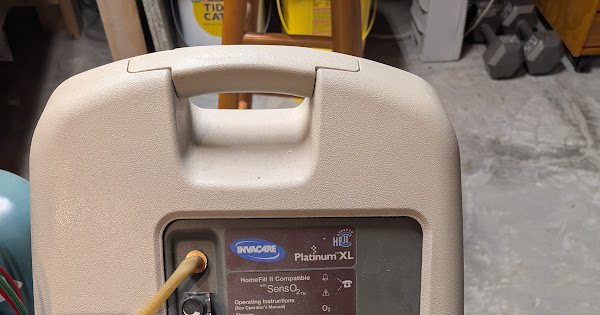
You can buy complete torch setups that include a concentrator from Rio and others. The concentrators are, or at least used to be, rebuilt medical concentrators. But, since you already have a torch, hose set and other pieces, your best best is to look for a used one yourself. As you travel, look for small companies that rebuild them for hospitals and medical facilities. You may also find them in FB marketplace being sold by a family whose member had one and then died. They can’t be reused by another person until they are rebuilt, but work fine for our purposes. My brother’s son found one set out by the side of the road that works just fine. For home use they come in 5 and 10 liters/minute models. I have had both and they worked fine for me. I have one of the rebuild businesses nearby and have them rebuild mine from time to time. It costs about $150 depending on the parts they put in and they also sell filters. These devices are made to run 24/7 for years, so the time that we put on them is very slight. There aren’t very many manufacturers, but look for one that has an O2 sensor and an alarm if the O2 goes below a set level of concentration. I think that it is in the 92% range. My current model is an Invacare platinum XL 5lpm machine. Last I knew, that is what Rio was using. I have attached a couple pictures of my concentrator and torch setup. I do keep a small O2 cylinder in my shed and use it when I am doing melts. The concentrator will do fine for small melts, but the bottled O2 can deliver more pressure and will speed up the process for bigger melts. I have had my current O2 cylinder for three years. I hope that this helps…Rob
2 Likes
Thanks!
The couple of videos I saw with concentrators seem to suggest there is a start up/priming period of a minute or two. I light the torch 20 to 30 or more times a day and having to wait on it to build pressure would drive me nuts.
Is this true of most units?
I think most let it run all day, so that should not be an issue.
The best thing that you can do for a concentrator is to let it run. I turn it on when I first use it and then let it run until I leave the shop. Mine have never taken more than a couple seconds to produce enough O2 to support a useful flame. I don’t know if they are big users of electrical power. They are running an air compressor that pushes room air through a set of seives that separate out the O2 and stores it at a fairly low pressure in two storage tanks. A four way valve cycles back and forth so that one is filling while you take O2 out of the other. There is a relief valve that on some can be adjusted to increase the outlet pressure. I am told by the repair people that this can knock the whole thing out of wack and cause damage…Rob
1 Like