I have to, I almost never think about setting before I start carving something. Setting is not my forte. 
I’ve used a number of different options to mount oddly shaped stones or carvings. The suitability of each method depends upon the individual stone or carving and whether it will be used as the sole design element, or as just a single component of a more complex design.
If I were making a pendant, the first thing I’d likely consider is just drilling a hole for a jump ring and attaching the ring to a bale that will ride a chain and prevent the pendant from twisting or flipping over. This is often the simplest solution, but whether or not it’s suitable depends upon the stone/carving and the overall design.
Another possibility would be to create a “bezel”, where metal is formed so as to encase and securely trap a portion of the stone or carving. This metal would have a ring or loop soldered on to serve as an attachment point. For stone that tolerates heat, the metal can simply be cast in place around the stone. For heat sensitive stone, I’d consider creating a design that would allow cold forming the metal around the stone by hammering, bending, squeezing with pliers, burnishing, etc. The method employed must carefully consider the fragility of the stone.
If the stone or carving is to become a component of a larger piece of jewelry, I might consider one of the methods used to mount pearls, which is to drill a blind hole and use adhesive to mount it on a post. That may or may not be suitable for a transparent carving, because the hole and post may be visible depending upon several factors. These include where the hole is placed, the orientation of the mounted stone, and the relationship of the mounted stone to other components of the piece.
Another idea is drilling a through hole that will accept a post that goes all the way through the stone. The exposed end is then either melted to form a ball, or cold-formed to expand the end so as to capture the stone or carving in place. Obviously, one would have to carefully consider the fragility and heat sensitivity of the stone when selecting the method for forming the end of the post to avoid causing damage.
Then there’s prong setting. The prongs can be plain, or they can be shaped to look like fingers, animal or bird claws or teeth, octopus tentacles, tendrils of seaweed, or something else that is consistent with the design theme of the overall piece.
Finally, I might consider wire wrapping, again depending upon the design theme of the overall piece. The variations that can be employed to make wire wrapping artistically appealing are far too numerous to list here. They include such things as twisting or braiding wires together to create stronger and more complex wire, running twisted/braided wires through a rolling mill to flatten them, etc.
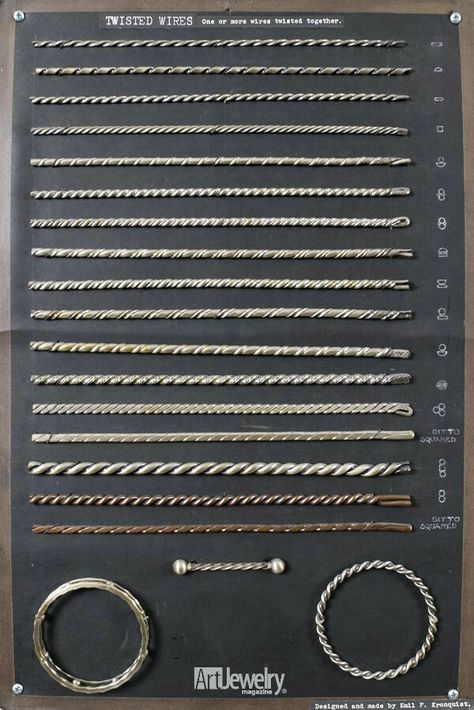
I’m sure the more experienced jewelers in this community can suggest still more ideas. I’m also certain they can provide advise and tips on the best way to implement each of the methods listed above…
How gorgeous! She looks like she’s almost in a fetal position, protective and comforting position. Without seeing the other side, I’d guess it is similar to the side we’re seeing. I wonder if a modified ‘basket setting’ could be adapted to wrap into some of the places that look like they could hold: where the elbow and hair intersect, the bottoms of her toes? She’d best be in a pendant, or brooch, if I had my choice, with a highly reflective plate so her underside can be seen, yet she will not endure stresses to unseat her. I hope when you’ve set her you share 