Not too many takers here. . . ? That’s odd. Maybe some encouragement will get a few more entries. So with that in mind, I’ll throw something in then 
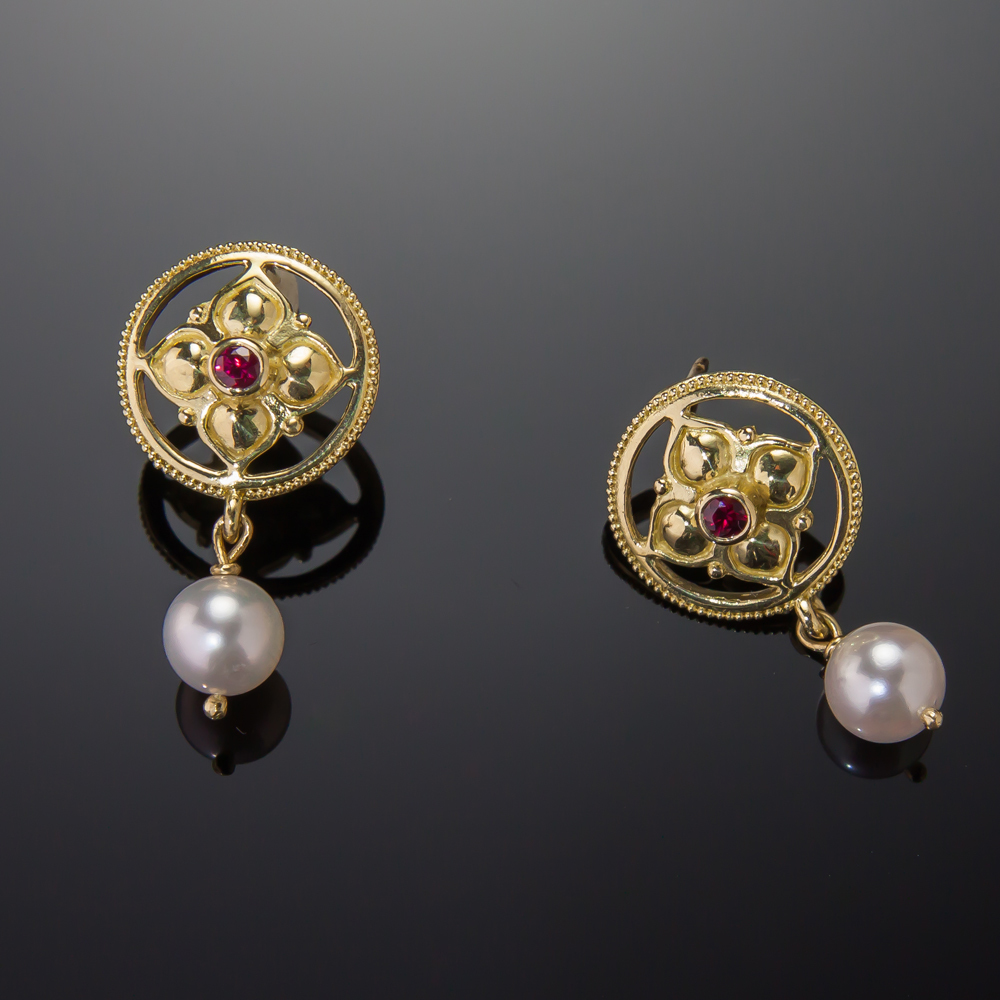
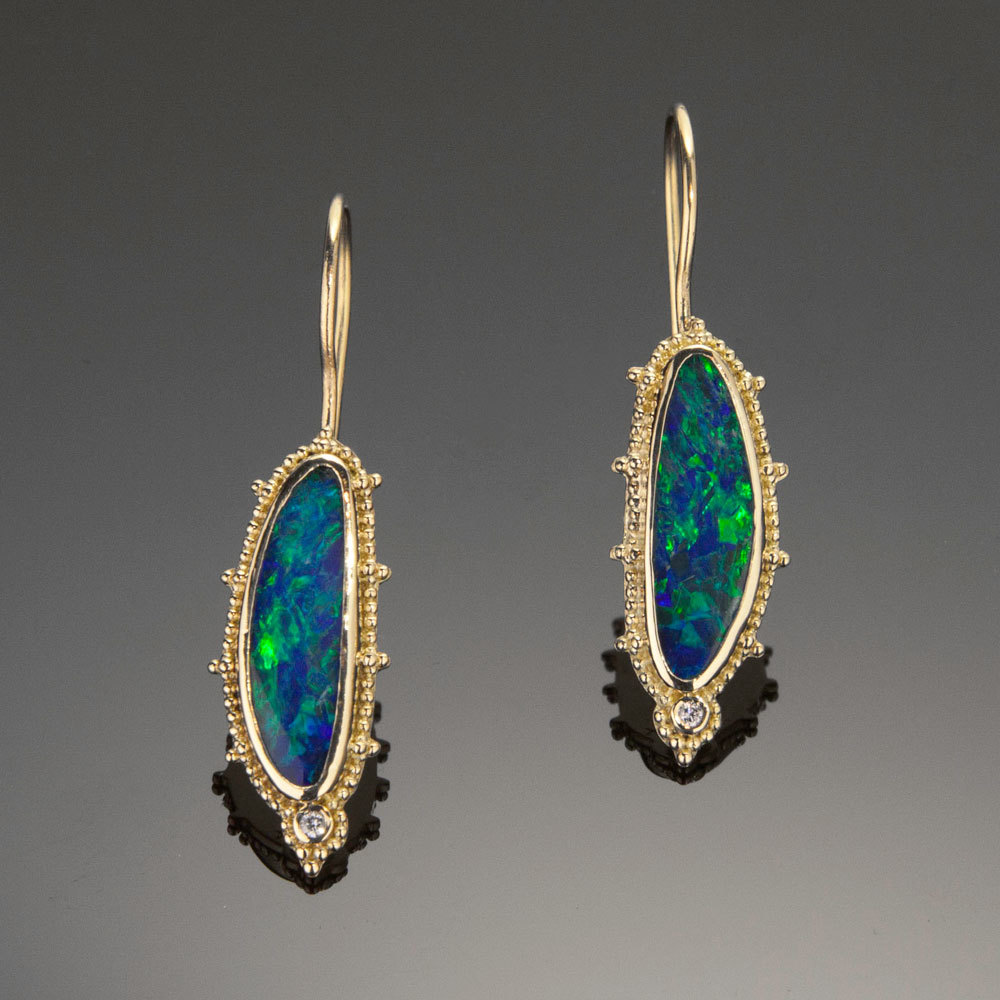
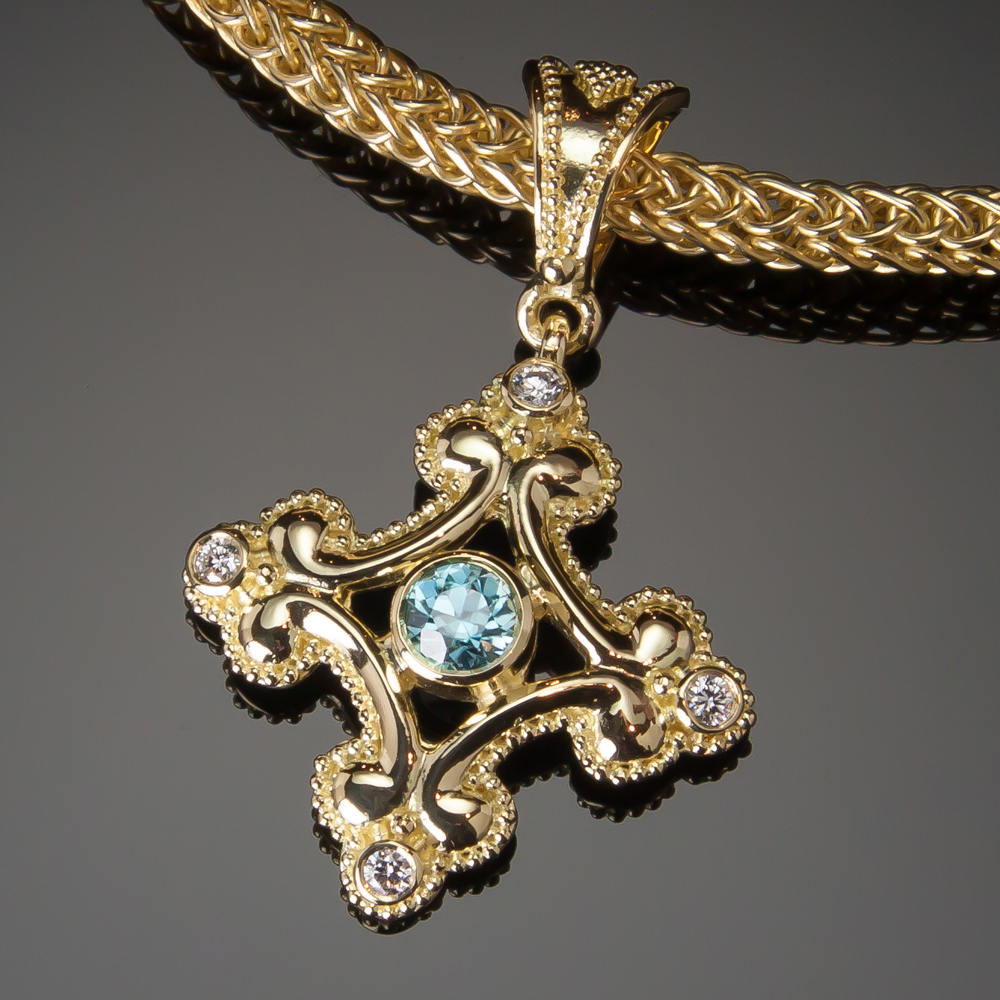
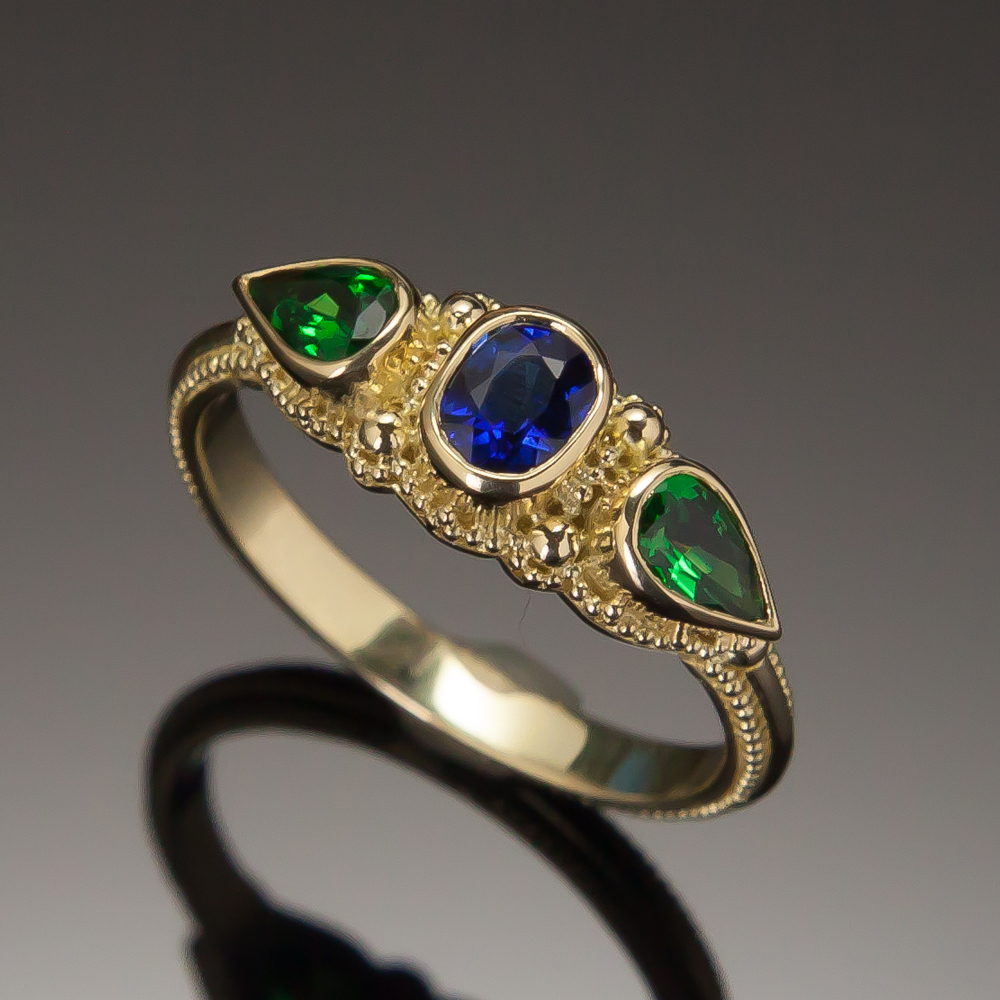
Nearly all of my work incorporates granules in some fashion or another as I’ve decided to make it my specialty. I use granulation in particular because of the ancient and regal nature it exudes considering that my work is predominately inspired by the concept of “treasure”. The moment I first saw its use, I knew that was where I wanted to go with my designs and work.
To do this particular style of 18K granulation which is a bit different from the more typically seen 22K, copper salts (cupric carbonate. . . powdered malachite in ancient times) are used in a solution of flux,glue, and water and painted over the granules that have already been put and held in place by the aforementioned solution and then allowed to dry. As the piece is heated up, the cupric carbonate forms a thin layer of copper between the granules that creates a “solder” that melts just slightly lower than the primary metal. While not true “fusing”, it’s about as close as it gets (not to open up the can of worms regarding the technical matters around the use of metallurgical terms as seen here: Granulation basics - #2 by leonid_Surpin. This is more just “shooting from the hip” to get the idea across). From there, the piece can be cleaned up, stone set, and given its final polish. Incidentally, due to the nature of granulation and the fact that the granules are applied at the end of fabrication, it means that the entire fabrication process must be done via the cupric carbonate fusing method described above. Solder can only be used after granulation is completed or the piece would fall apart at the higher temperatures.