Anyone who knows what kind of glue and paper is used in this technic?
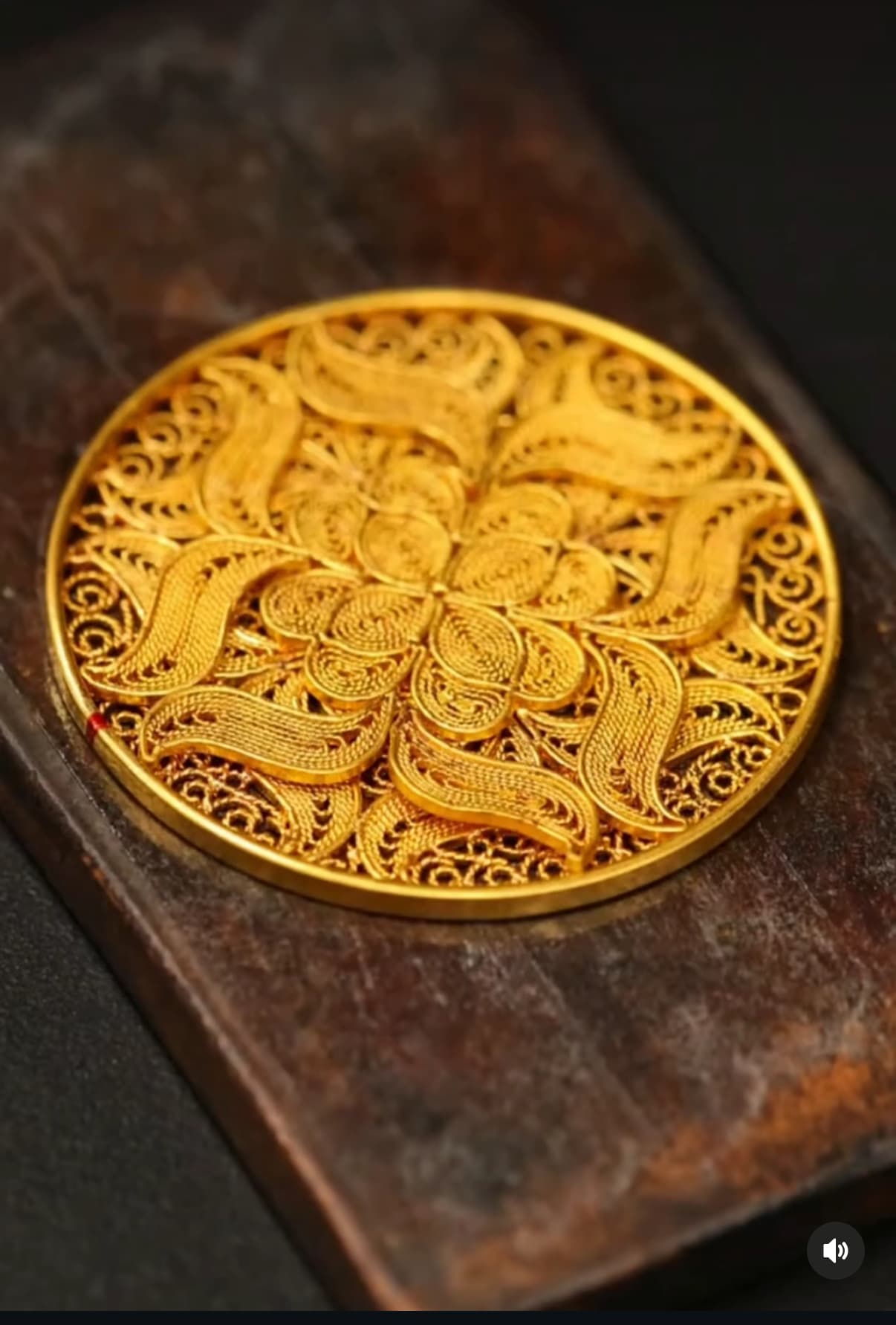

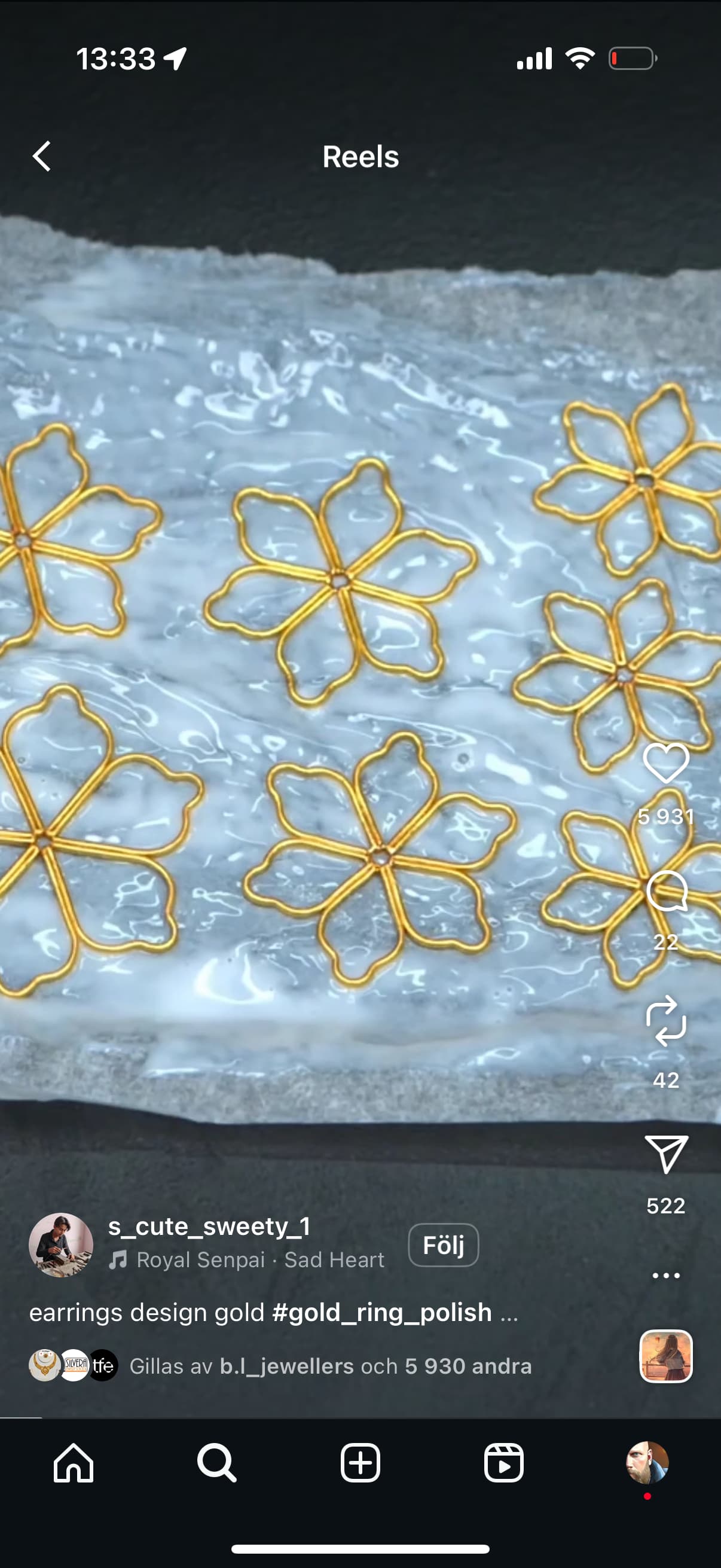
I have read that folks use hide glue, or gum arabic. I just bought some hide glue to try using with my granulation projects. I haven’t tried it yet. If I get soot, I will try gum arabic next.
Please let us know what works for you!
-S
2 Likes
You don’t need paper and glue to do filigree. You can do another technique where you modeling clay to hold little pieces in place, then use plaster of paris to cover the piece with a thick coat. once the plaster is dried out well, you can peel the modeling clay away. Then solder the pieces together while the plaster holds it together. just make sure the plaster of paris is a thick coat. then after you have soldered it all together, you can soak it in water and the piece will remain. Or you can use tension to hold pieces in place and forget about paper, glue, modeling clay and plaster. That is a technique that a man who is a member has taught here on this forum, or Victoria Lansford also teaches it. I learned it decades ago from Victoria
3 Likes
With the understanding that I’m not a real jeweler (I just found the visor) there are things about this filigree I find a bit odd.
The two basic types of filigree I’ve learned about via DVDs are are Russian from Victoria Lansford, and Yemenite from Yehuda Tassa. Russian filigree uses open elements held in place by the springiness of wire that must not be annealed, while Yemenite filigree requires annealed wire so the tightly wrapped elements don’t spring apart. This piece would be in the Yemenite style.
Based upon what I got from Yehuda Tassa’s videos, this piece has irregularities.
Again, with limited experience on my part, Tassa did not wrap each individual wire element in heavier frames. This piece clearly has them. They do add to the design so possibly it is an accepted practice or possibly the maker just liked it better that way. But the elements, at least on the top layer do not seem to work the way Yemenite filigree works, which is friction fitting the elements into the outer framework.
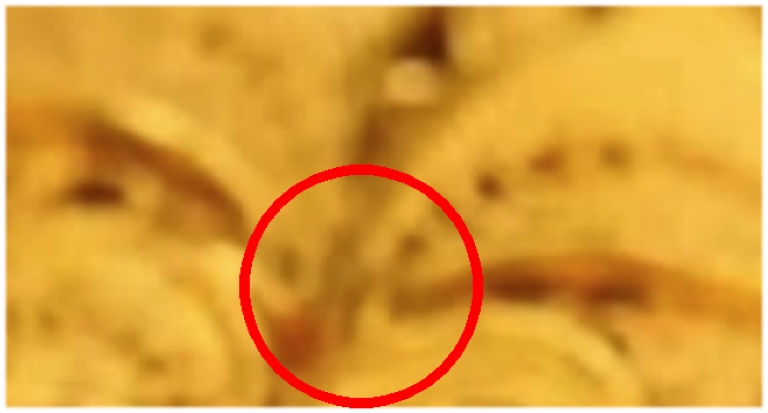
The area circled in red (on the top right of the piece) shows at least a few elements not touching, so they are not being held in place by friction. Since there are two layers there is the bottom layer to rest the top elements on, that may not be necessary. Generally you place all elements held in place by tension, turn the piece upside down, place solder and flow it, which is why friction fit is needed.
What seems like a real anomaly to me, again not being a real jeweler, is the framing of some wrapped elements. It looks like the framing wire meanders around several elements in some places rather than being individual frames that are soldered closed around a single element. In this image from the lower center it looks like one length of heavier wire wraps around a number of elements, and there are open gaps.
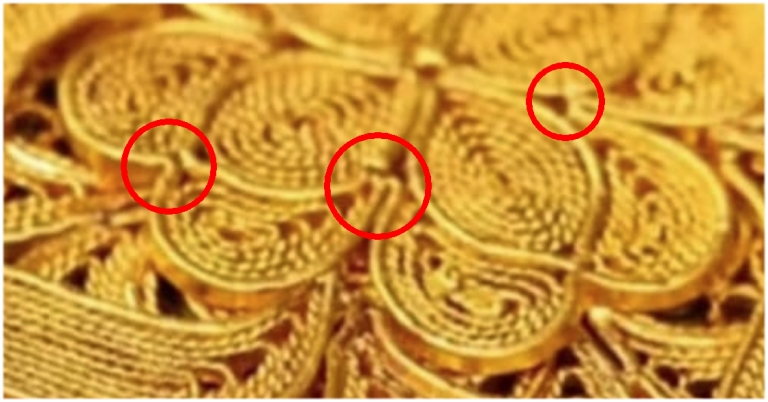
As long as the top layer is soldered in place resting on the lower layer it works. I’m not sure it would work if there was no bottom layer for support.
It is an impressive piece, more complex than any I’ve made, but the gaps and meandering element-wrapping are counter to “the way it’s 'sposed to be”. Artistic license? At normal viewing distance they’d be unnoticed. Enlarged, they make me feel ‘itchy’. Is that OCD?
Hi,
Milt Fischbein comes to mind…talented filigree artist
julie
Yehuda Tessa filigree dvd
perhaps i need to add this to my “santa list”!
i have Victoria Lansfords russian filigree dvd…it is great!
as is her eastern chasing and repousse dvd!
julie
1 Like
Hi,
ok, i see what you are talking about…glue…paper…
perhaps it is any type, just to hold everything together while assembling…and then it looks like everything is fused?…and the glue and paper burn off?
julie
Both the Yeminite and the Russian filigree are basically the same. The Russian is more open and less little curled wires in all the spaces. The Yeminite is more coiled and The areas you show are the various layers that have been made separately and then soldered together. What I counted was at least three layers. Each layer is made with the frame and then filled in. After those component parts are made they are laid on top of each other and then soldered together. The maker might have tacked parts of it before layering or making the full layer itself. Those gaps do not bother me since I’ve had decades of this type of work under my belt. The frame of each layer is not annealed. It is also thicker and larger gauge metal. It will hold those tight coils. The coils themselves are annealed so they are flexible.
1 Like
Just to clarify, filagree is not synonymous with granulation. Solder is widely used in filigree, whereas granulation does not employ solder, but instead relies on a chemical reaction to create a seamless (no solder) eutectic bond. This is where the above-mentioned hide glue comes in. Hide glue is a convenient organic material that can be purchased from many hardware stores and used as a catalyst for fusing. Just be sure to store it in the fridge to slow any decomposition, as it was once a living thing.
Hope that helped make a distinction between methods!
2 Likes