Hi Julie!
You may wish to give this combo a look (I am not affiliated with Wen and do not receive any compensation for recommending their products, I’ve just had good experiences with their stuff):
https://www.amazon.com/WEN-4206T-2-3-Amp-5-Speed-Benchtop/dp/B0CB13PS5V/ref=sr_1_17?dib=eyJ2IjoiMSJ9.K5joERo-qRfVWbWdcoRhP1fhQhQ2x0IVQ3bcU5H1A9c4vrksDohU8EXxVfJJ-sY7Ggm1s6xinQuv3FxiWShUwB6WuiO71aKn4oCoJ3YAgGXXzzz4pWpZKMbx-tLmHGr3W8YNtILgpFh7dv8kafQ79p_ejnzqaV7eAlUPFS7uV1k1ge5PcPaupReJC2fpUqm49LYCVA0U63rNWhEPikEw7NDfo8QGzq25svrJj9IvqLSt1Zw_MgZCQKb1evbAG0h3aBzMf2rXPaPPUmSp4k-WJJNq_7OYv2PorsRWg6hGHZw.HVe8WfGPrkfEXx54p8w2_DRFly3bA8Ztjt8pG96S3-U&dib_tag=se&keywords=benchtop%2Bdrill%2Bpress&qid=1757139645&sr=8-17&th=1
Wen is not a premium brand like Jet or Delta, but instead a value-priced brand targeted at cost-conscious consumers. I own several of their tools and have found them to be an outstanding value for the money.
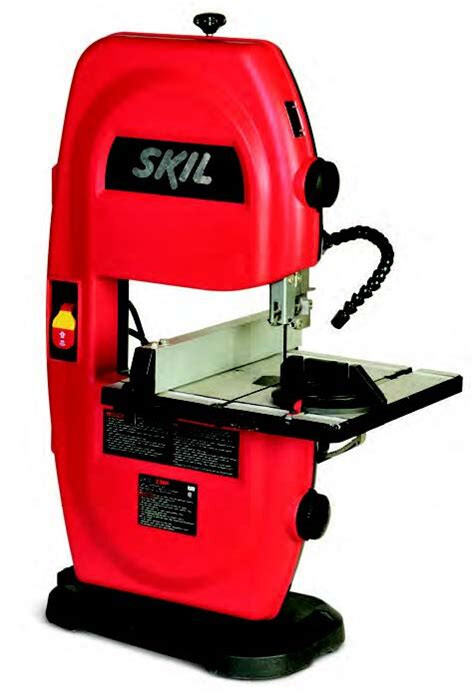
I own a large Jet 14” woodworking bandsaw with a riser kit to increase the throat capacity and a high performance blade guide upgrade kit for resawing veneer from expensive tropical hardwoods and burls. I use this machine as my dedicated veneer resawing station. I also have a large Enco 14” woodworking bandsaw that I use for general curved cut work. I bought a small Ryobi 9” tabletop-sized woodworking bandsaw for smaller precision curved cut jobs. I also have a small Inland tabletop diamond blade wet saw for jewelry work that I use to cut rough stone and shells like Paua, Abalone, and mother of pearl.
Ripping thick stock to produce thin stock is referred to by cabinetmakers as “resawing”. The band saw is the correct tool for this task. The secret for achieving accurate results is to use a proper blade, tune the blade guides for the specific blade being used, properly tension the blade, and use a tall rip fence that is properly tuned.
A wide blade with a low tooth count is preferred for resawing. The wider the blade, the less the cut will drift. A low tooth count allows a wider gullet between teeth to efficiently carry chips out of the cut and prevent the blade from clogging or binding. If you were to buy the linked saw, I’d recommend this blade for resawing work.
I always use an alundum stone to round over the trailing edge of my bandsaw blades to reduce friction and produce a smoother cut. This is less important when resawing, more important when using narrow blades to cut tight curves.
Ball bearing blade guides are comprised of three ball bearing rollers. Two are oriented so they pinch the blade between them and prevent it from twisting, the third is positioned behind the blade to keep it from kinking as the operator feeds work into the blade’s teeth. The guides must be properly adjusted for the specific blade installed on the machine. The manual will contain instructions for adjusting the guides.
Blade tension must be properly adjusted to achieve good results. If the tension is too loose, the blade will more easily kink or twist. If the tension is too tight, the blade will wear out prematurely and could even break. The manual will contain instructions for adjusting blade tension.
Resawing requires a proper rip fence that is correctly tuned for the installed blade. The height of the fence must be enough to support the work as it is fed through the blade. A rip cut will always tend to “drift” off center by an amount determined by the adjustment of the blade guides and the blade tension. A carefully aligned saw may have no discernible drift, whereas a poorly aligned saw may have a drift of several degrees off center to one side of the blade centerline. It’s possible to compensate for drift by slightly loosening the rip fence and canting it to one side or the other just enough to straighten the cut, then tighten it down in this new position.
My experience has been that a premium brand saw is inherently more accurate and easier to adjust. However, I’ve found that one can get even a cantankerous bargain brand saw to produce acceptable results by carefully tuning all the adjustments.
While cutting, resist the temptation to use a high feed rate to force the work into the blade so as to hurry the job along. Instead, best results are achieved by allowing the machine to do the work at its own pace. This pace will vary according to a combination of the material where softwoods cut more easily/quickly than hardwoods; with the thickness of the work where thicker work cuts more slowly; and according to the tooth count of the blade where a lower tooth count cuts faster but leaves a rougher finish than a blade with a higher tooth count, but a higher tooth count removes chips less efficiently and is prone to bind if the count is too high for the thickness of the work at hand.
I hope the above proves useful…

 )
)